
Affiliate disclaimer: TravelForBusiness.org participates in affiliate programs, including Amazon Associates, and may earn a commission from qualifying purchases at no extra cost to you.
Introduction
If you travel for work often enough, luggage stops being “a bag” and becomes part of your operating system: it has to roll smoothly at 6 a.m., protect your laptop and suits, survive taxis and gate-check chaos, and still look professional in front of clients.
This Briggs & Riley review focuses on what matters to business travelers: durability over the years, repairability, innovative packing systems, carry-on compliance realities, and whether the premium price actually pays off.
Quick verdict: Briggs & Riley is one of the best choices for frequent flyers who value long-term reliability and repair coverage more than initial price. Their standout edge is the “buy once, keep it working” approach—especially in softside lines like Baseline.
Find Your Perfect Briggs & Riley
Answer a few quick questions to discover which bag best fits your business travel style
How many business trips do you take per year?
What’s your typical trip length?
What airlines do you typically fly?
Do you prefer softside or hardside luggage?
What’s your packing style?
What do you carry for work?
Your Personalized Recommendations
Based on your travel style, here are the best Briggs & Riley options for you
Features Overview
The “Simple as That” lifetime repair guarantee
Briggs & Riley’s defining feature isn’t a pocket or zipper—it’s the brand’s lifetime guarantee that covers functional damage for the life of the bag.
Important nuance: it focuses on functionality (handles, wheels, zippers, etc.) and does not cover cosmetic wear/tear, cleaning, or lost/stolen bags.
Why business travelers care: when a wheel fails mid-quarter or a handle jams during a connection, a repair policy that’s designed to keep the bag in service changes the whole value equation.
CX® Compression–Expansion: more capacity without “sitting on the suitcase.”
Many Briggs & Riley suitcases use CX®—a mechanism that expands for packing and then compresses back down to the original profile once zipped. The brand describes it as: expand → pack → compress (back to original size).
In real travel terms: it’s excellent for return legs (extra materials, swag, a second pair of shoes) while keeping a cleaner shape for overhead bin fit.
Outsider® handle: flatter packing surface, fewer wrinkles
Instead of rails running through the interior, the Outsider® handle is mounted externally on many models, creating a flatter packing surface and preserving usable internal space.
Business payoff: suits and dress shirts pack flatter, and you waste less volume working around handle tubes.
Materials: soft-side ballistic nylon and modern hard-side shells
- Baseline (softside) is built around ballistic nylon and premium accents (varies by piece).
- Sympatico (hardside) highlights a three-layer Makrolon® polycarbonate shell on the collection page (and some specific pieces list recycled polycarbonate in specs—always check the exact model).
“Two-bag” systems for airport efficiency
Briggs & Riley supports stacking/connecting a briefcase or tote to rolling luggage (often via compatible straps/accessories), which is hugely helpful when you’re moving through airports one-handed.
Performance Analysis
Durability: where the brand earns its reputation
Briggs & Riley is built for frequent-use stress: curbs, uneven sidewalks, escalator impacts, overstuffed zips, and baggage-handler “tests.” Softside lines, in particular, are designed for abrasion resistance and long-term structural retention.
One Baseline carry-on example lists ballistic nylon as the material and positions it for long-term wear resistance.
My practical take: If you take 10+ trips/year, durability is not a nice-to-have. It’s a productivity tool. Luggage failures cause missed trains, slower airport movement, and last-minute replacements—exactly when you’re already dealing with policy compliance and reimbursement delays.
Wheels and handling: “rolls like it should”
Premium luggage should roll quietly and track predictably. Briggs & Riley spinners generally feel stable and controlled, while 2-wheel options are often preferred by travelers who deal with rough sidewalks or want slightly more straightforward mechanics.
Tip: If your work travel includes cobblestones, older cities, or lots of walking, consider a 2-wheel carry-on; if you do mostly airports/hotels, spinners are typically more effortless.
Carry-on compliance: the real-world rule
Briggs & Riley notes common carry-on standards (often referenced as 22 x 14 x 9 inches, including wheels/handles, varying by airline).
Some models are marketed as meeting carry-on regulations for many airlines, but airline rules vary, and enforcement varies even more.
Business traveler reality: If you fly internationally a lot (especially with stricter carriers), prioritize “global/international” carry-ons and be cautious about expanded modes.
Capacity and packing: why CX actually matters
Here’s the “work trip” packing pattern where CX shines:
- Outbound: compressed profile, clean silhouette, easier overhead fit
- Return: expand for extra items, then compress to regain a slimmer footprint
That’s not just convenience. It reduces the odds you’ll be forced into a last-minute checked-bag scenario (and the time loss that comes with it).
Tech and business features: laptop access, quick pockets, and charging pass-throughs
Depending on the line/model, you’ll see features aimed at business travelers: quick-access pockets for security lines, dedicated laptop sections in work bags, and charging pass-through solutions (battery not included).
Good news: the brand “gets” business travel.
Less positive news: some configurations are excellent, others are just okay, so you should choose based on your carry pattern (laptop + cables + toiletries + suit) rather than buying based on brand halo alone.
Pros and Cons
Pros:
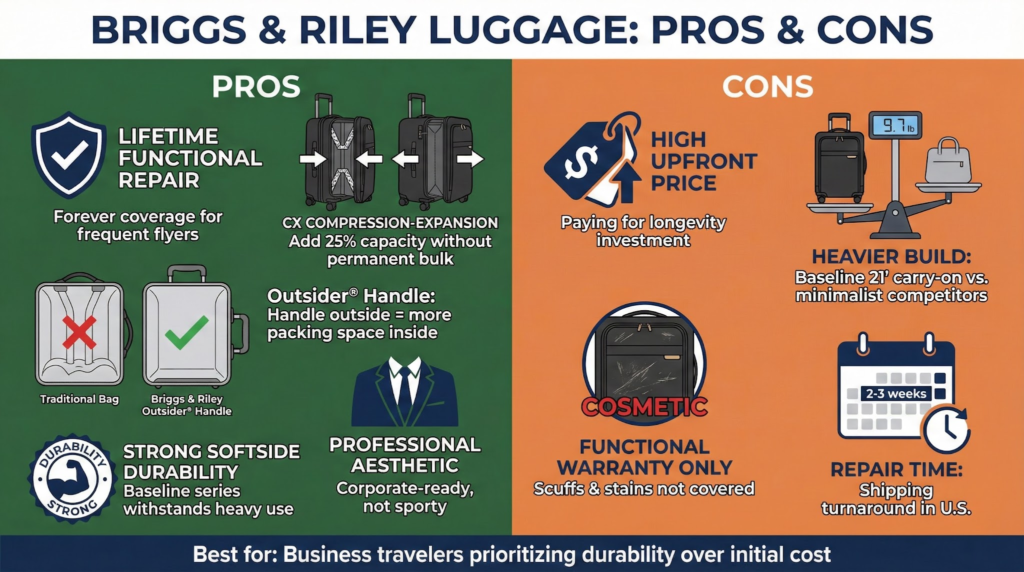
- Lifetime functional repair coverage is a major differentiator for frequent flyers.
- CX compression–expansion adds capacity without permanently bulking the bag.
- The Outsider® handle improves interior flatness and usable packing space.
- A professional aesthetic that fits corporate environments (not flashy, not “sporty”).
- Strong softside durability (especially Baseline) built for heavy use.
Cons:
- High upfront price (you’re paying for longevity and service).
- Some models are heavier than minimalist competitors (tradeoff: sturdiness). For example, one Baseline 21" 2-wheel carry-on lists 9.7 lb.
- Warranty is functional, not cosmetic—scuffs and stains are part of life.
- Repairs can take time if you ship a bag in; Briggs & Riley’s repair form notes an approximate 2–3 week window (U.S. process).
User Experience
What it’s like to live with (not just buy)
Briggs & Riley tends to win on “daily friction” details:
- Smooth movement through terminals
- Stable stacking with compatible bag/strap systems
- Innovative organization that supports quick transitions (hotel ↔ client site ↔ airport)
For corporate road warriors: this matters because you’re not traveling once—you’re repeating the same system every week. Minor annoyances become high costs over time.
The repair experience: what to expect
If you need service, Briggs & Riley offers official repair routes. The U.S. online process includes obtaining an RA number and shipping the bag to a repair center, with an estimated turnaround window listed on the form.
Best practice for busy professionals:
- If you have two key bags (carry-on + backpack/briefcase), don’t send both in at once.
- Schedule repairs right after a trip cycle, not right before a major client week.
Value for Money
The “cost per trip” way to judge it
Briggs & Riley is rarely the cheapest option—but for frequent travelers, the math can flip.
A simple way to evaluate value:
- Estimate trips/year (e.g., 12–20).
- Estimate how long you’ll realistically keep the bag (5–10+ years).
- Divide the total cost by the number of trips.
A premium bag that lasts 8 years at 15 trips/year becomes 120 trips of use. If repairs keep it functioning, the cost per trip can end up surprisingly reasonable—especially compared to replacing midrange luggage every 2–3 years.
Briggs & Riley Cost-Per-Trip ROI Calculator
Discover whether premium luggage is worth the investment. Calculate your cost per trip and see when premium pays off compared to budget alternatives.
Premium Bag (Briggs & Riley)
Alternative Bag (Mid-Range)
Your ROI Analysis
| Year | Premium Total | Alternative Total | Savings |
|---|
🎒 Shop Premium Briggs & Riley Luggage
Who gets the best ROI?
- Frequent flyers who punish luggage (10+ trips/year)
- Consultants and client-facing pros who need a sharp look and reliable roll
- Sales reps who value speed and one-bag mobility
- Entrepreneurs paying out of pocket who want a long-term asset
Who might be overpaying?
- Occasional travelers (1–3 trips/year)
- Travelers who prioritize ultra-lightweight over robustness
- Anyone hard on cosmetic appearance expectations (because scuffs happen)
Recommended Picks for Business Travelers
(Choose based on your travel style, not the logo.)
Best “workhorse” softside: Baseline carry-on
If you want the classic Briggs & Riley experience—durable softside feel, innovative structure, and long-term practicality—Baseline is the starting point. The Baseline collection emphasizes ballistic nylon and a business-ready design.
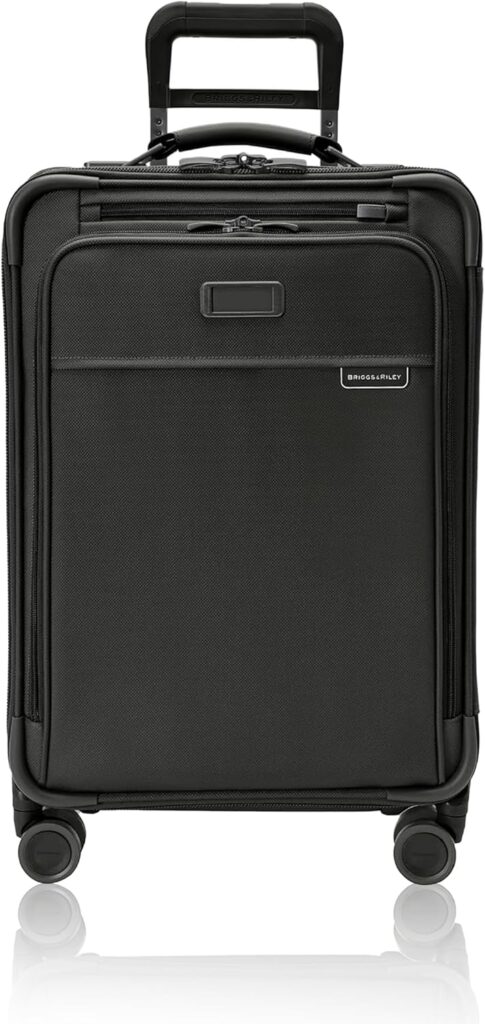
Check the current pricing for a Baseline carry-on here.
Click here to read the full review of the Briggs & Riley Baseline collection
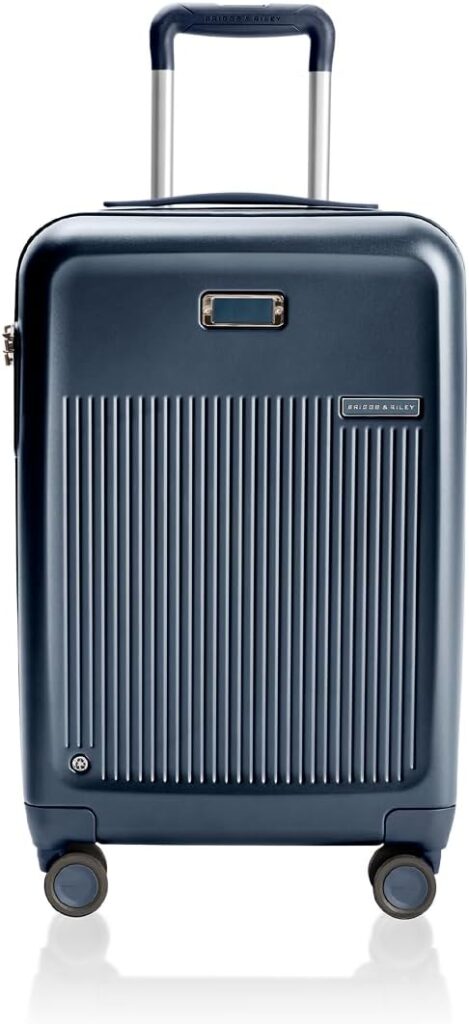
Best hardside option: Sympatico
If you prefer hardside luggage (cleaner shell, easy wipe-down, more rigid protection), Sympatico is the headline choice, using Makrolon® polycarbonate at the collection level and durable polycarbonate in many model specs.
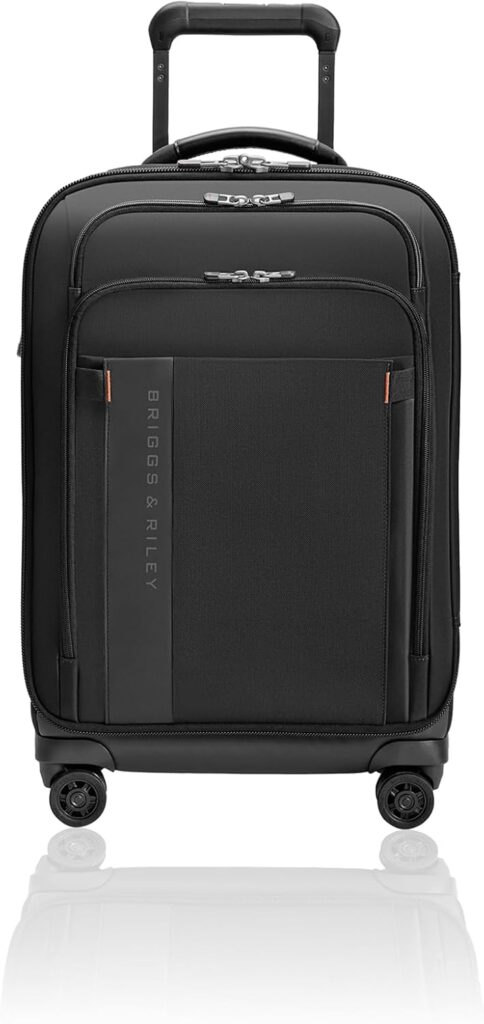
Best for lighter travel and quick access: ZDX carry-on
ZDX is often positioned as a lighter, more flexible line that still carries key Briggs & Riley design DNA, including the Outsider® handle on many pieces and expansion options (check the exact model).
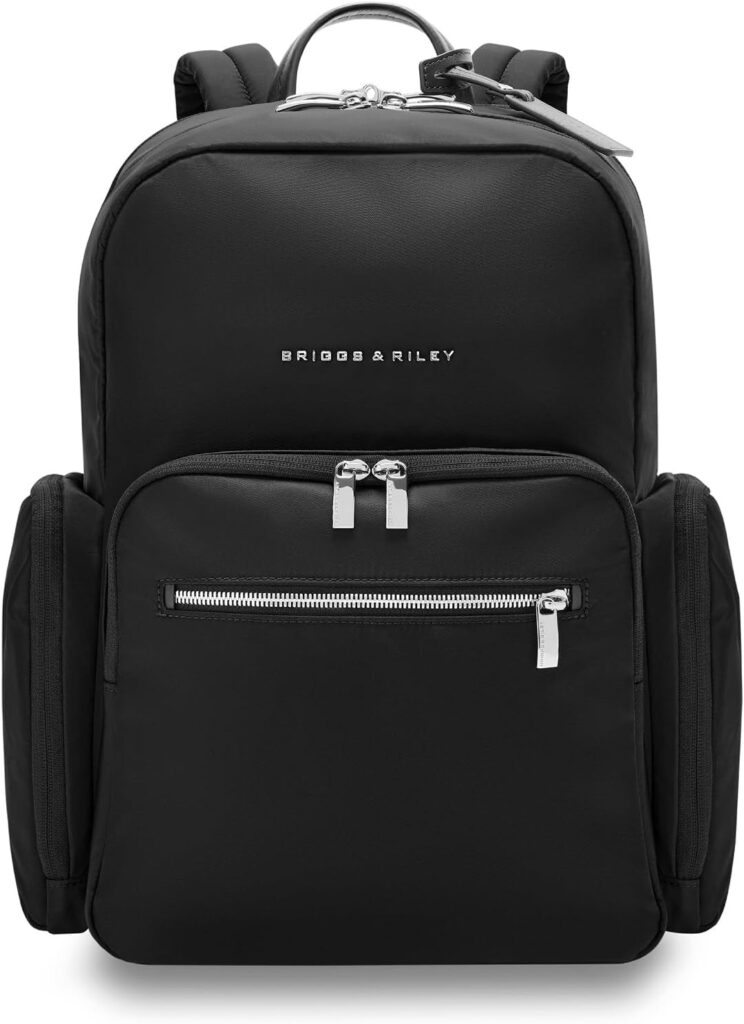
Best pairing for laptop-heavy trips: business backpack/briefcase + roller
If you travel with a laptop, chargers, tablet, notebook, and maybe a second monitor, don’t force everything into the roller. Pair a work bag with the roller using compatible strap/stacking systems to keep one-hand mobility.
Final Verdict
This Briggs & Riley review boils down to one core question: do you want the lowest price today, or the lowest headache over the next 5–10 years?
Briggs & Riley is a premium brand that earns its position with a travel-first design philosophy (CX expansion, Outsider handle) and a lifetime functional repair guarantee tailored to frequent travelers, while clearly stating that cosmetics and loss/theft aren’t included.
Buy Briggs & Riley if:
- You travel often (especially for work) and want a long-term, serviceable system.
- You value packing efficiency and wrinkle reduction.
- You’d rather invest once than replace repeatedly.
Skip it if:
- You travel occasionally and would rather keep the budget low.
- You need ultra-lightweight above all else.
- You want luggage that stays cosmetically pristine forever (nothing does).
Bottom line: For corporate road warriors, consultants, and frequent flyers, Briggs & Riley is one of the safest “premium” bets—because it’s designed not just to look good on day one, but to keep working years later.
Ready to choose your setup? Start with the best-sellers here