
Affiliate disclaimer: TravelForBusiness.org participates in affiliate programs, including Amazon Associates, and may earn a commission from qualifying purchases at no extra cost to you.
Overview
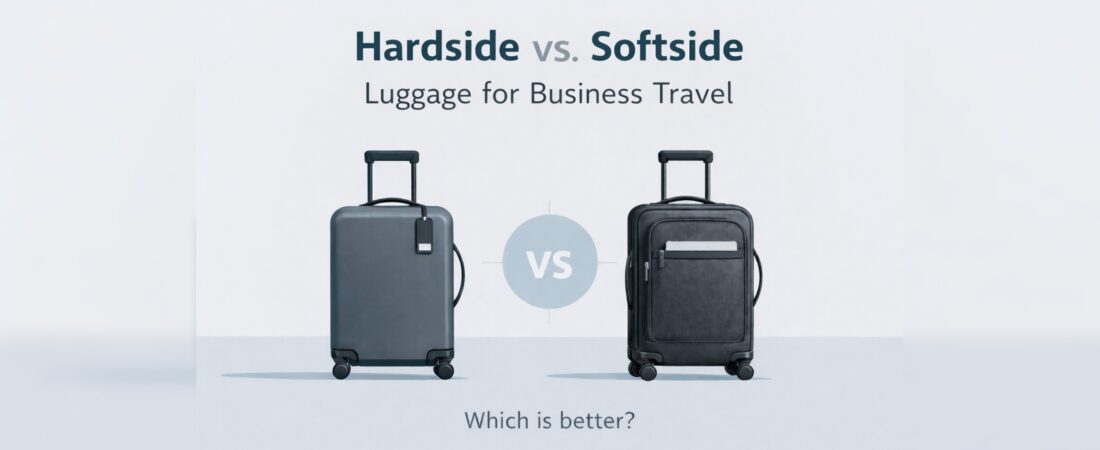
If you’re searching Hardside vs. Softside Luggage for Business Travel, you’re probably not debating luggage “style.” You’re trying to avoid very real business-travel problems:
- A crushed suit before a client meeting
- A cracked shell or a blown zipper the night before a flight
- An overhead bin fight because your bag won’t compress
- A messy suitcase that slows you down at security
- Receipts and documentation chaos that delays reimbursement
Here’s the truth: neither hardside nor softside is “best” for everyone. The right choice depends on how you travel—carry-on only vs. checked, short hops vs. long hauls, train + taxi combos vs. airport-only, and how much you value quick access and organization.
This guide breaks it down by features, real-world performance, cost, and the best fit for different types of frequent business travelers.
Hardside vs Softside: What’s Best for Your Business Travel?
Not sure which luggage type fits your travel style? Answer a few quick questions and get a clear recommendation.
Feature Comparison
Durability and Impact Protection
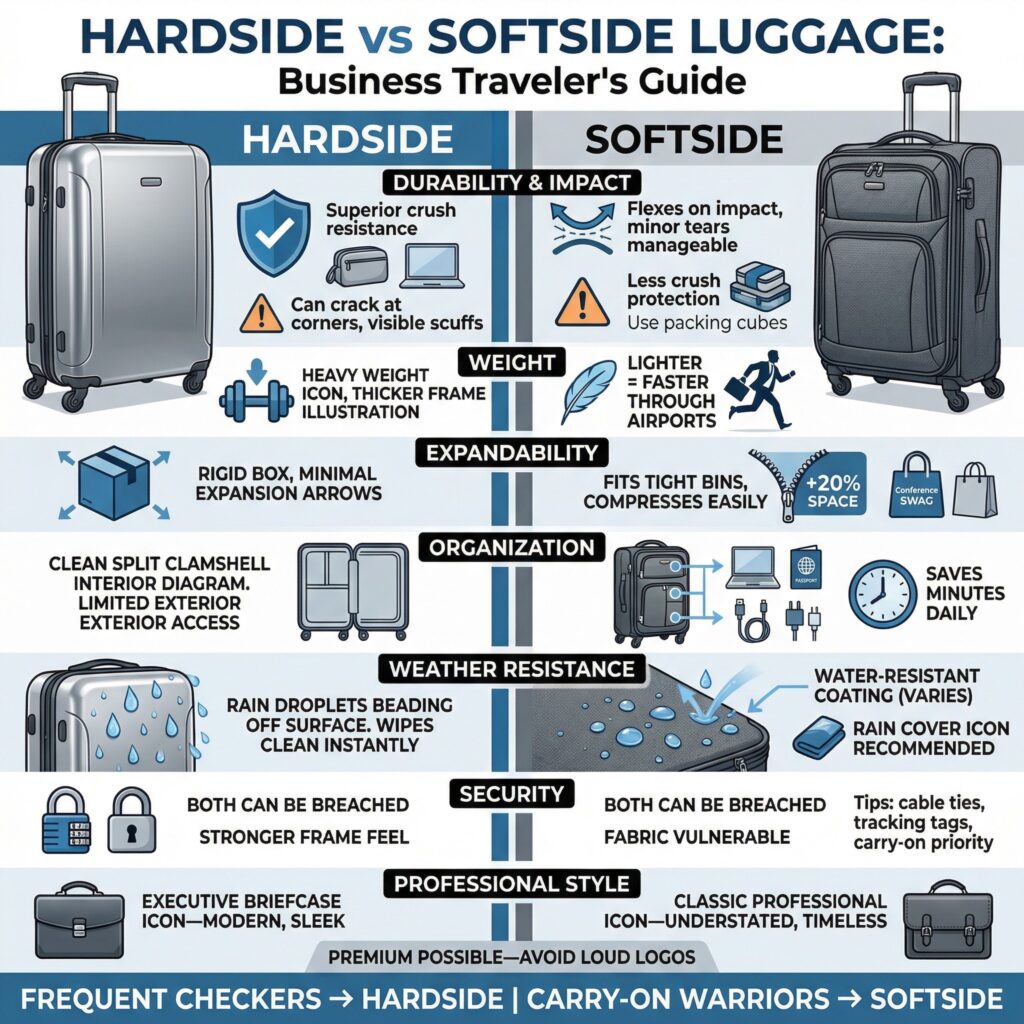
Hardside strengths
- Better at crush resistance (useful if you must check a bag or your carry-on gets jammed in a packed bin).
- Typically protects fragile items (toiletries, tech accessories) better from external pressure.
Hardside drawbacks
- Can crack under sharp impacts (especially at corners), depending on material and thickness.
- Scuffs are more visible (some finishes hide this better than others).
Softside strengths
- Often handles bumps as “dents you don’t see” because the fabric flexes.
- Small damage (abrasion, minor tears) can be less catastrophic than a shell crack.
Softside drawbacks
- Less crush protection—packing strategy matters (structured packing cubes help a lot).
Business reality: If you’re checking bags often (international trips, long trips, airline status that includes a checked bag allowance), hardside has a real edge for impact protection. If you’re carry-on-only and constantly squeezing into overhead bins, softside is usually the more forgiving workhorse.
Click here to read the full article about the Best Carry-On Luggage for Business Travelers
Weight and Ease of Handling
- Hardside can be heavier, especially with thicker shells and reinforced frames.
- Softside is often lighter, which matters when airlines weigh carry-ons—or when you’re sprinting through Schiphol.
For business travelers who move fast, lighter wins more days than not.
Expandability and “Flex Space”
This is one of the most significant practical differences.
Softside
- Commonly offers expandable zippers (extra room for return-trip items).
- Compresses slightly to fit sizers and awkward overhead bins.
Hardside
- Some models expand, but expansion can make the bag feel boxy and harder to fit.
- Less “give” when bins are tight.
Business takeaway: If you frequently come home with conference swag, client gifts, or extra wardrobe pieces, softside expansion is a cheat code.
Organization and Quick Access
This is where softside often dominates for corporate travel.
Softside advantages
- External pockets for:
- laptop/tablet quick grab
- boarding pass/passport
- receipts
- chargers and cables
- Better for travelers who need workflow, not just storage.
Hardside advantages
- Cleaner interior layout (often split clamshell) and suitable for neat packers.
- But you usually lose fast exterior access (some hardside bags add a front laptop door, but it’s not universal).
If you travel for business and constantly pull documents, tech, and chargers, exterior access is not a “nice-to-have.” It’s minutes saved every travel day.
Weather Resistance and Spill Risk
- Hardside generally wipes clean and resists light rain better.
- Softside varies by fabric; many are water-resistant, but not all are truly water-shedding.
If you travel in rainy cities or do a lot of curbside waiting, a hardside can be comforting. If you choose softside, look for tighter weaves and coated fabrics—and keep a small packable rain cover if you’re paranoid.
Security and Tamper Resistance
Let’s keep expectations realistic:
- A determined thief can breach both.
- Hardside can feel more secure (especially with strong frames), but zippers are common on many models.
- Softside is easier to slice (fabric is fabric).
If you’re checking luggage in higher-risk routes or carrying high-value items, consider:
- carry-on only when possible
- simple cable ties or tamper-evident seals
- tracking tags (and separating essentials into a personal item)
Professional Look and Client-Facing Style
This matters more than people admit.
- Hardside often looks sleek, modern, and “executive.”
- Softside often looks classic, understated, and less scuff-prone visually from a distance.
If you’re walking into client sites, either can look premium—but avoid overly loud finishes and huge logos if you want a polished corporate vibe.
Performance Analysis
Overhead Bin Compatibility
Softside advantage: it compresses.
That matters on:
- smaller regional jets
- full flights with gate-checked carry-ons
- overhead bins already stuffed by early boarders
Hardside “holds its shape,” which is great until it’s not. If your flights often include smaller aircraft, softside is usually the safer bet.
Mobility in Real Travel Conditions
Both categories come with excellent spinners now, but consider:
- Hardside can feel like a rolling box—stable and smooth on flat floors.
- Softside can be slightly more forgiving on uneven sidewalks and train platforms.
Wheel quality and handle stability matter more than shell type here, but frequent mixed-mode commuters (train + taxi + walking) often prefer softside.
Packing Efficiency
Hardside wins for structured packing:
- The clamshell layout makes it easy to split outfits and gear
- better for “packed like a drawer.”
Softside wins for flexible packing:
- You can stuff odd-shaped items.
- Expansion makes return trips easier.
If you hate wrestling your bag shut, softside is typically less stressful.
Repairability and Longevity
- Softside: zippers, handles, and wheels are common failure points—but many repairs are straightforward.
- Hardside: if the shell cracks, that can be harder to fix cleanly.
If “buy it once and stop thinking about it” is your goal, look at brands known for long-term durability and good support—regardless of shell type.
Price Comparison
Budget Tier (€80–€200)
- You’ll find both hardside and softside.
- Expect decent wheels on some, but more variability in handles and zippers.
- Best move: prioritize wheels + handle stability over “cool shell.”
Mid Tier (€200–€450)
- Strong options in both styles.
- This is often the best choice for people who travel a lot and want reliable performance without paying a lot.
Premium Tier (€450+)
- You’re paying for:
- refined materials
- better rolling performance
- stronger hardware
- better long-term support (varies by brand)
Worth it if: you travel 10+ times per year and your luggage is basically mobile infrastructure.
Best For Different Users
Corporate road warriors (10+ trips/year)
Best fit: Softside carry-on (most of the time).
Why: exterior pockets, the ability to expand, the ability to move bins around, and a faster airport workflow.
When hardside makes sense: you check bags a lot or carry fragile things that need protection.
Small business owners & entrepreneurs
Best fit: depends on your trip mix.
- Lots of short trips + carry-on only: softside
- Trade shows, product samples, or checked bag routines: hardside
Consultants & independent contractors (reimbursement and compliance-heavy)
Best fit: Softside (workflow + documentation).
Why: quick-access pockets for receipts, paperwork, and tech saves time—and time is money.
Sales professionals & field reps (regional travel, client-facing)
Best fit: Softside for flexibility, unless you’re hard on gear or checking bags frequently.
Quick Decision Guide
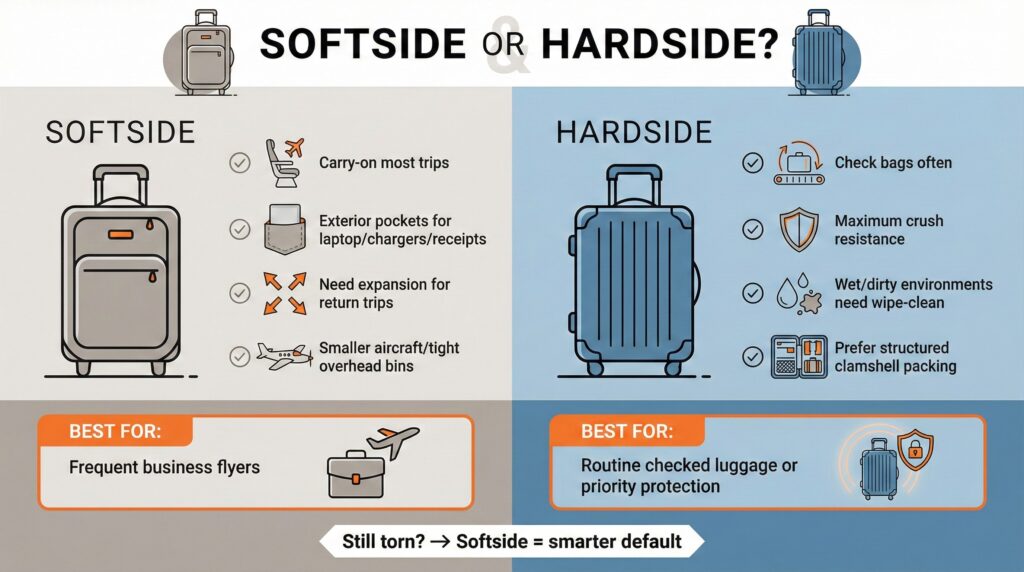
Choose softside if you:
- carry-on most trips
- want exterior pockets for laptop/receipts/chargers
- often need expansion for return trips
- fly smaller aircraft or tight overhead bins
Choose hardside if you:
- check bags often
- want maximum crush resistance
- travel in wet/dirty environments where wipe-clean matters
- prefer structured, clamshell packing
If you’re still torn:
Softside is usually the smarter “default” for frequent business flyers. Hardside becomes the better choice when checking luggage is routine, or protection is the priority.
1) Best lightweight softside carry-on (easy on your back, great for frequent trips)
Travelpro Maxlite 5 Carry-On Spinner
A lightweight, no-fuss carry-on that’s easy to lift, easy to roll, and ideal for frequent short business trips.
Check price & availability on Amazon
2) Best premium softside for professionals who want comfort + polish
Travelpro Platinum Elite Carry-On Spinner
A premium softside option with a more refined feel, smoother handling, and the kind of finish that looks right in a client-facing setting.
Check price & availability on Amazon
3) Best “buy once, travel forever” softside upgrade
Briggs & Riley Baseline Essential Carry-On Spinner
Built for heavy travel schedules with top-tier durability and long-term reliability—ideal if you want one carry-on for years of work trips.
Check price & availability on Amazon
4) Make either bag pack better (and look more organized instantly)
Packing Cubes (business-travel friendly)
The fastest way to pack cleaner, find items faster, and keep your suitcase looking organized from departure to return.
Check price & availability on Amazon
5) Faster reimbursement = fewer headaches (tiny tool, huge payoff)
Portable receipt scanner
Capture receipts in seconds, stay audit-proof, and submit expense reports faster—especially useful on multi-stop work trips.
Check price & availability on Amazon
6) Best premium hardside carry-on for a polished, protective setup
Travelpro Platinum Elite Hardside Expandable Spinner
Built for frequent business travelers who want durability, smooth mobility, and a polished professional look.
Check price & availability on Amazon
Final Recommendation
If your main goal is speed, flexibility, and fewer daily annoyances, choose softside—especially if you’re carry-on-only, traveling weekly, and juggling receipts, tech, and tight overhead bins.
If your travel is check-heavy (long trips, international routes, or you regularly pack items that must not get crushed), hardside is the safer choice for protection and wipe-clean convenience.
My practical “business traveler” answer:
- Most people should start with a quality softside carry-on and dial in their packing system.
- Add a hardside option later if your travel pattern shifts toward frequent checked luggage or you need extra protection.
That’s how you end up with luggage that supports your schedule—instead of sabotaging it.