
Introduction
An excellent business travel backpack does two things at once: it keeps you mobile (airport sprints, taxis, client sites) and professional (secure laptop, clean organization, easy-access essentials). If you choose the wrong backpack, it can cause discomfort such as sore shoulders, messy cables, crushed shirts, and the inevitable “where’s my boarding pass?” moment at the most inconvenient time.l
This guide is built for frequent flyers, consultants, sales reps, and entrepreneurs who travel for business and need a backpack that works in real life, not just in product photos.
Disclosure: Some links may be affiliate links.
Affiliate disclaimer: TravelForBusiness.org participates in affiliate programs, including Amazon Associates, and may earn a commission from qualifying purchases at no extra cost to you.
Understanding the Basics
What makes a backpack “business travel” (not just “travel”)?
A business-focused backpack typically prioritizes:
- Laptop + tech protection (padded sleeve, false bottom, structured shell).
- Fast airport flow (easy-access pockets, wide opening, smart compartmenting).
- Professional silhouette (holds shape, clean lines, minimal dangling straps).
- Organization that matches your routine (chargers, passport, meds, cables, headphones, receipts).
- Comfort under load (good harness, breathable back panel, balanced weight distribution).
Backpack vs. rolling carry-on (and when you need both)
- Backpack only: short trips (1–2 nights), minimalist packers, heavy walking/commutes.
- Backpack + carry-on: 3+ nights, formalwear, winter clothes, multiple shoes, trade show gear.
- Rolling carry-on only: heavy loads, injuries, long airport days, strict dress requirements.
Key Considerations
1) Size and airline carry-on reality
Backpacks are rarely measured at the gate, but overstuffed bags attract attention—especially on smaller aircraft. A practical range:
- 20–30L: day trips + overnight minimalist.
- 30–40L: sweet spot for 1–3 nights and tech-heavy loads.
- 40–45L: can work, but easier to overpack and look bulky in meetings.
2) Laptop protection (non-negotiable)
Look for:
- Dedicated laptop compartment (preferably separate from the main cavity).
- False bottom / suspended sleeve (so your laptop doesn’t hit the floor).
- Space for 15–16" laptops plus a tablet (if you carry one).
3) Organization: the “grab zones” that matter
The best business backpacks have three “zones”:
- Quick-access zone: passport/ID, earbuds, pen, sanitizer.
- Tech zone: laptop, tablet, charger, cable kit, power bank.
- Main zone: clothes, dopp kit, shoes, snacks.
4) Comfort and carry ergonomics
Prioritize:
- Contoured shoulder straps
- Breathable back panel
- Sternum strap (huge for stability)
- Optional hip belt if you carry heavy loads
5) Materials and durability
Common winners:
- Ballistic nylon (durable, business-appropriate)
- High-denier nylon (lighter, still strong)
- Weather-resistant coatings + quality zippers (helpful for rain)
6) Professional look (yes, it matters)
For client-facing roles, aim for:
- Neutral colors (black, navy, charcoal)
- Minimal branding
- Structured profile that doesn’t collapse into a “gym bag” shape
7) Work-travel extras that pay off
- Luggage pass-through (slides over roller handle)
- Separate shoe/laundry area (or at least a bottom zone)
- Bottle pocket that doesn’t steal main space
- Key leash
Step-by-Step Guide: Choose the Right Business Travel Backpack
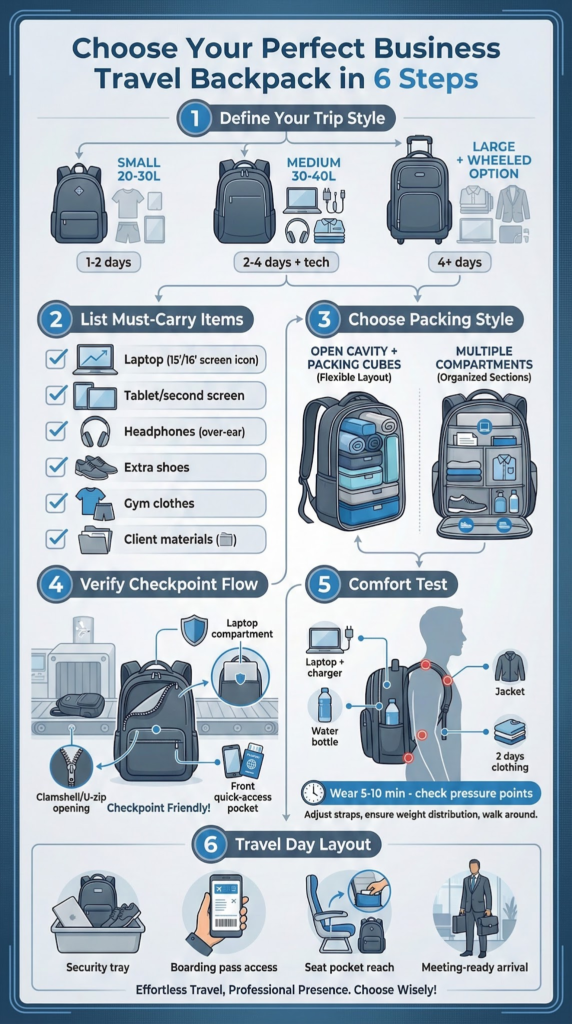
Step 1: Define your trip style (be honest)
Pick what matches 80% of your trips:
- Overnight / 1–2 days: 20–30L
- 2–4 days, tech-heavy: 30–40L
- 4+ days or multiple outfits: backpack + roller
Step 2: List your “must-carry” items
Write your non-negotiables:
- Laptop size (15", 16", etc.)
- Second screen/tablet?
- Headphones (over-ear take space)
- Shoes count
- Gym clothes?
- Client materials (folders, samples)
Step 3: Choose your packing approach
A) One big cavity + cubes
Pros: flexible, fast packing, fewer “dead pockets”
Cons: You need a simple system
B) Built-in compartments for everything
Pros: everything has a home
Cons: can reduce usable space for clothes/shoes
Step 4: Verify checkpoint flow
Check for:
- Padded, separate laptop area
- Wide-opening design (clamshell or big U-zip helps)
- Quick-access pocket for ID/phone
Step 5: Test comfort under realistic weight
Load it with:
- laptop + charger kit
- bottle
- light jacket
- a couple of days of clothes
Wear it for 5–10 minutes. Pressure points show up fast.
Step 6: Confirm your “travel day” layout
Your bag should make these painless:
- security tray unload/reload
- boarding pass + phone reach
seat-pocket essentials access - arriving at a meeting without a strap chaos
Recommended Business Travel Backpack Brands and Top Picks
Below are proven, business-friendly backpack lines with models that consistently fit the needs of frequent work travelers. I’m grouping them by “who they’re for” so you can match your use case.
Best “one bag for work + 1–3 day trips”
Thule Aion Travel Backpack 28L
A streamlined carry-on-style backpack built for travel organization and daily use. If you like a clean, modern look and a dedicated travel layout, it’s a strong all-rounder.

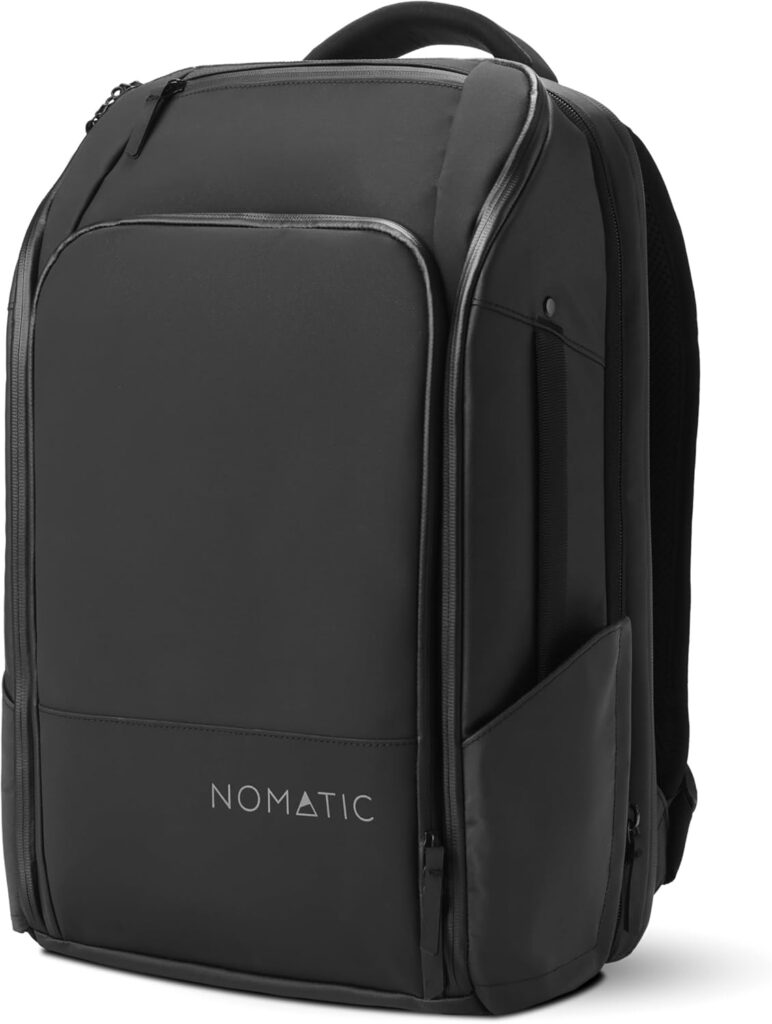
Nomatic 20L Travel Pack (expandable)
Superb if your week varies: it can function like a personal-item style pack, then expand when you need more capacity. Nomatic notes that its 20L Travel Pack is designed to fit under most airline seats as a personal item, and when extended to 30L, it may be treated as a carry-on (depending on airline).
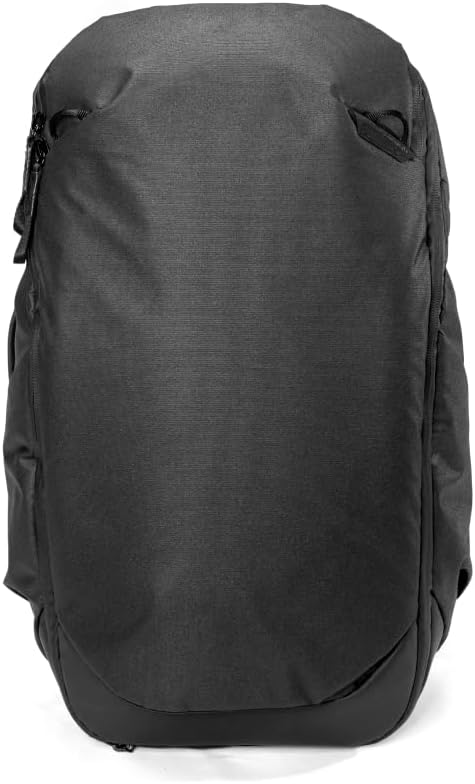
Peak Design Travel Backpack 30L
Strong choice if you want a sleek bag that can flex between “commute mode” and “trip mode.” Peak Design states that it meets international carry-on size requirements when switched between compressed and expanded modes and includes padded laptop/tablet sleeves.
Best for a polished, client-facing look
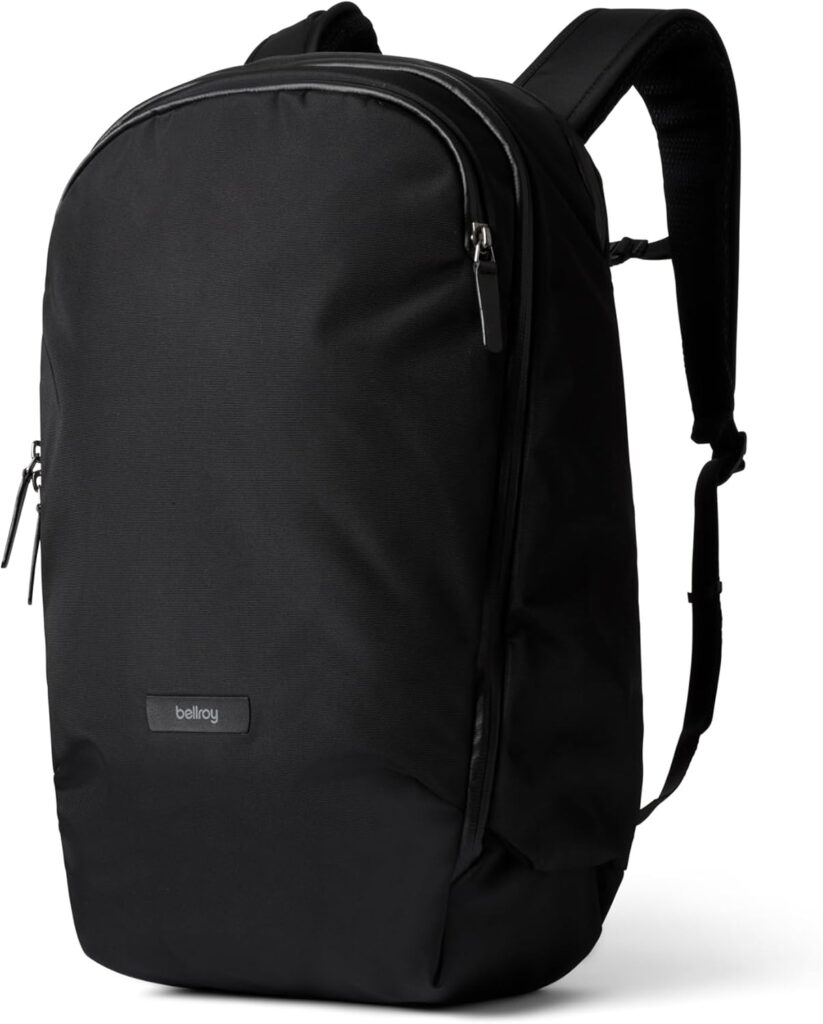
Bellroy Transit Workpack Pro (22L / 28L)
Bellroy positions the 22L for lighter loads and the 28L for larger frames/longer distances, and notes it fits 16” laptops and uses water-resistant fabric—nice for professional travel days.
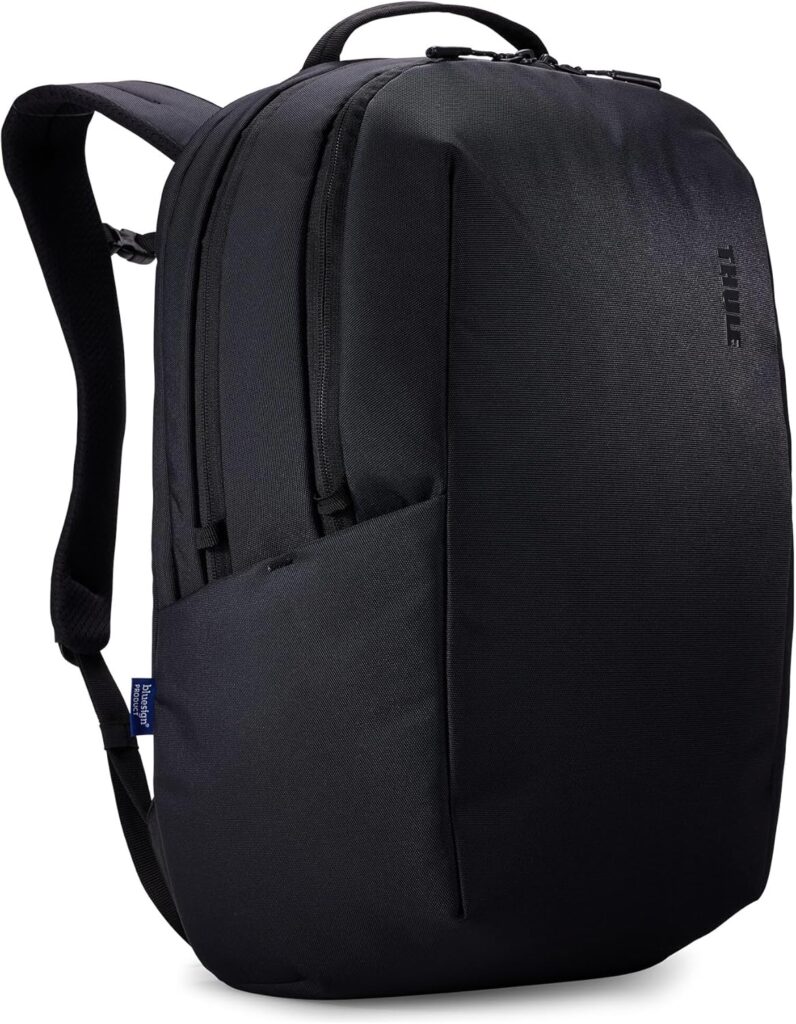
Thule Subterra 2 (27L)
A clean, modern aesthetic that stays office-appropriate while still being travel-capable. Thule describes it as designed for modern travelers with “thoughtful storage.”
Best premium “buy once, use for years”
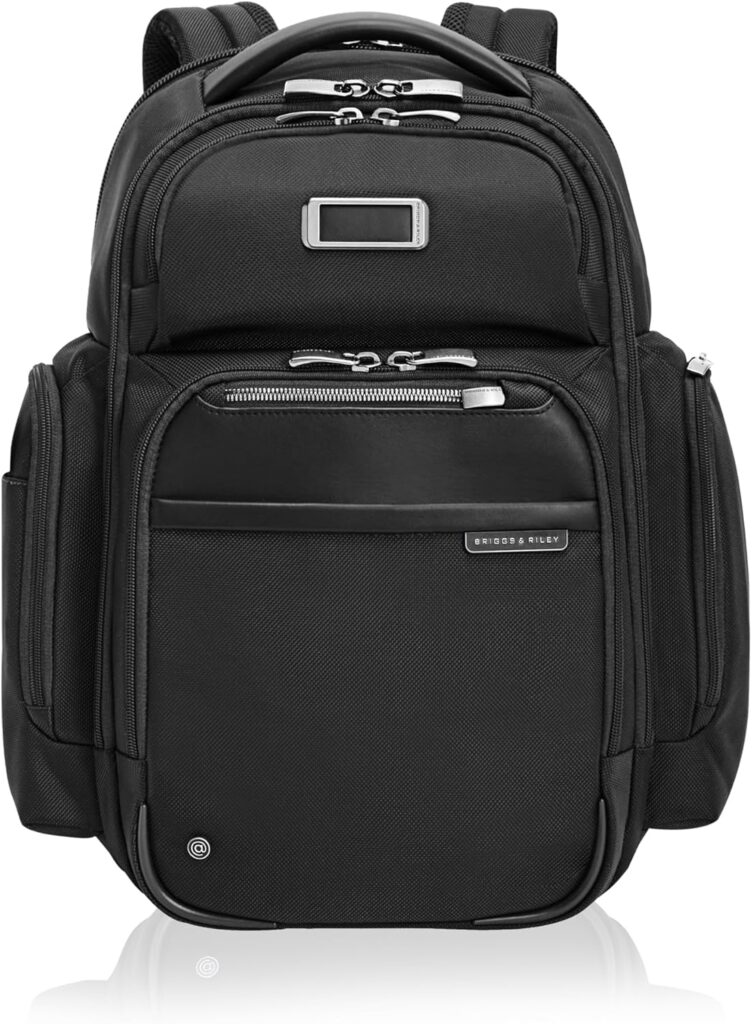
Briggs & Riley @work backpacks
If you already travel with Briggs & Riley luggage, the slip-through compatibility is a practical win. Their product pages highlight a slip-through back panel designed to fit their Outsider handle system, quick-access pockets, and durable materials.
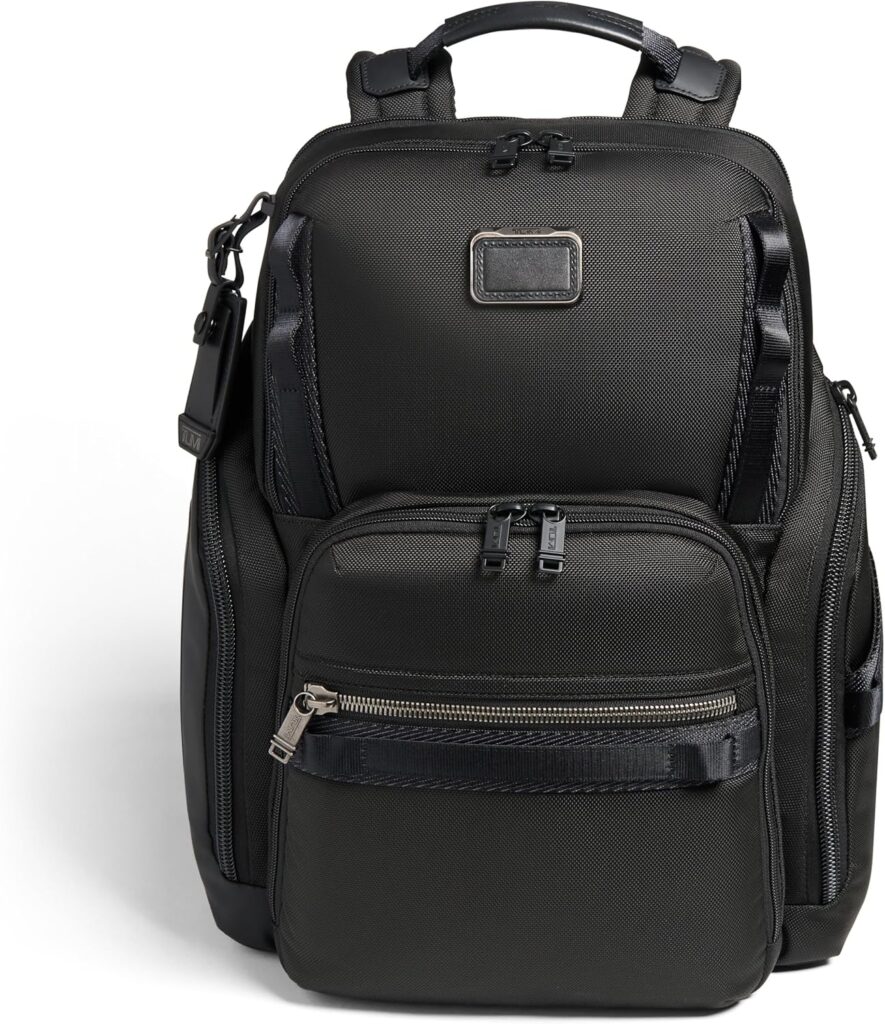
TUMI Alpha Bravo backpacks (select models)
TUMI’s Alpha Bravo line is popular for a reason: durable materials, ample organization, and “travel-ready” features such as expandable compartments on some models. For example, TUMI describes a padded laptop compartment that accommodates up to a 15" PC or a 16" MacBook, and notes that the Alpha Bravo backpacks feature zipper expansion.
Best “corporate road warrior” tech backpacks
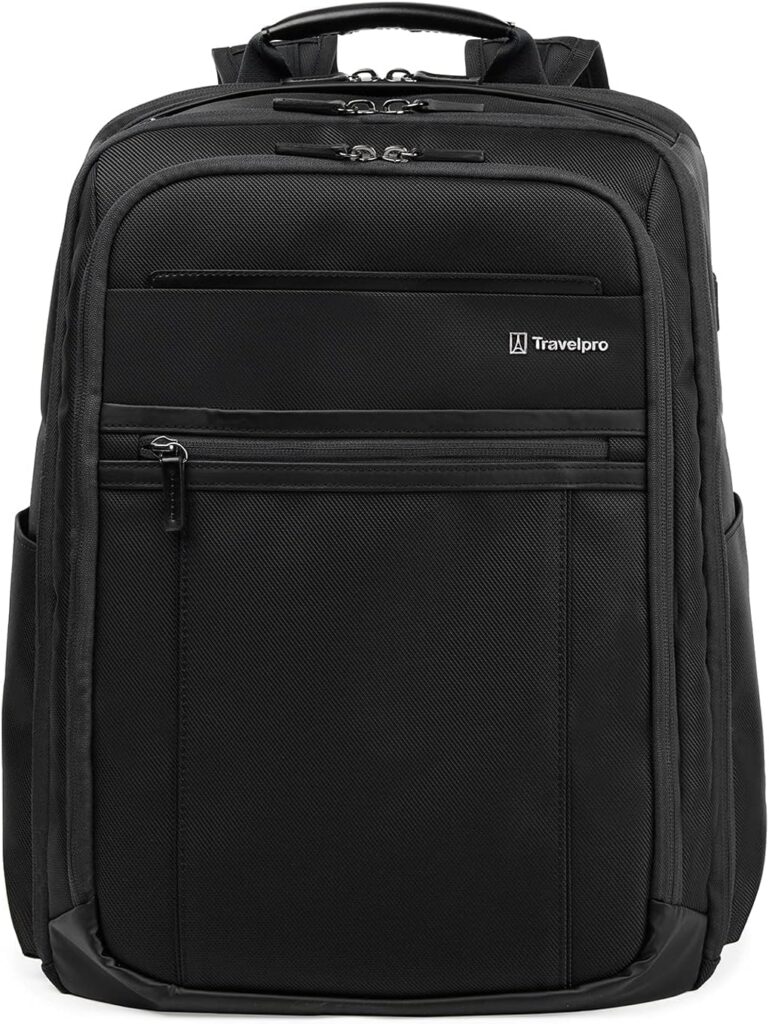
Travelpro Crew Executive Choice 3 backpacks
Travelpro positions this line as “tech-savvy” work/travel bags, and product listings highlight built-in charging ports on models like the Large Backpack. They also offer multiple sizes (e.g., slim and medium options).
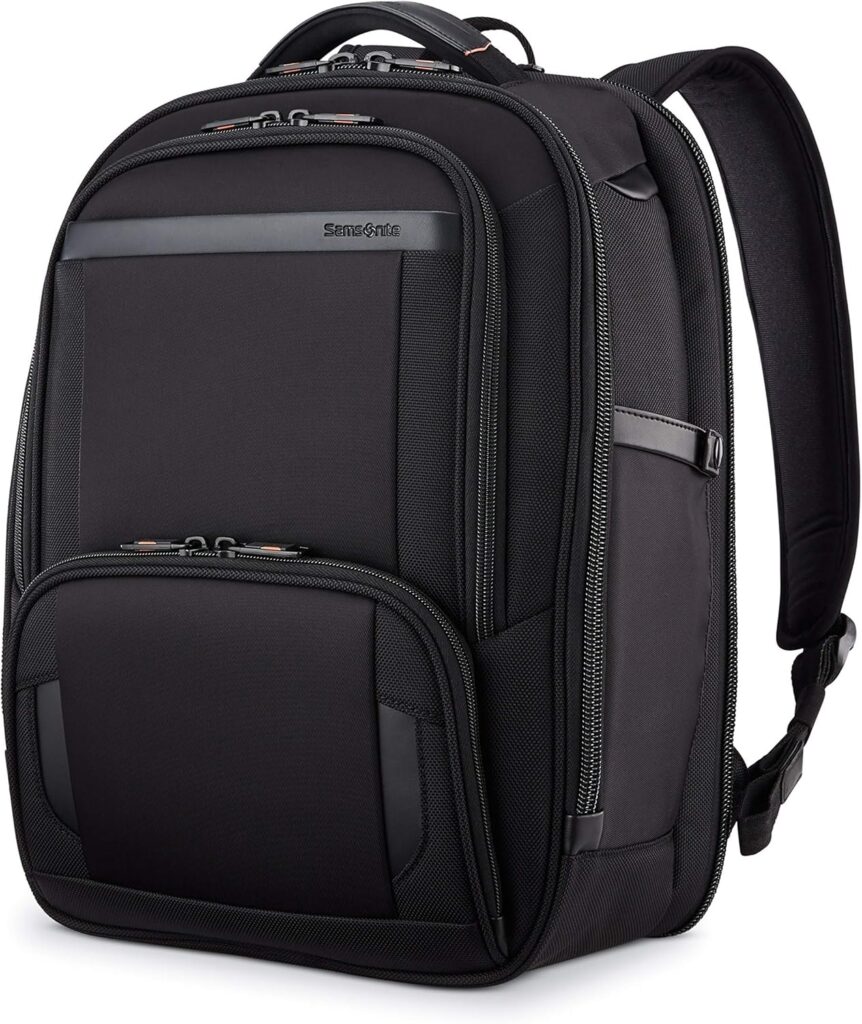
Samsonite Pro Slim Backpack
Samsonite lists a padded laptop compartment (fits up to a 15.6" laptop) plus features like a USB port and a wireless-charging pocket design (power bank sold separately).
Best value workhorse (great for sales reps + frequent commuters)
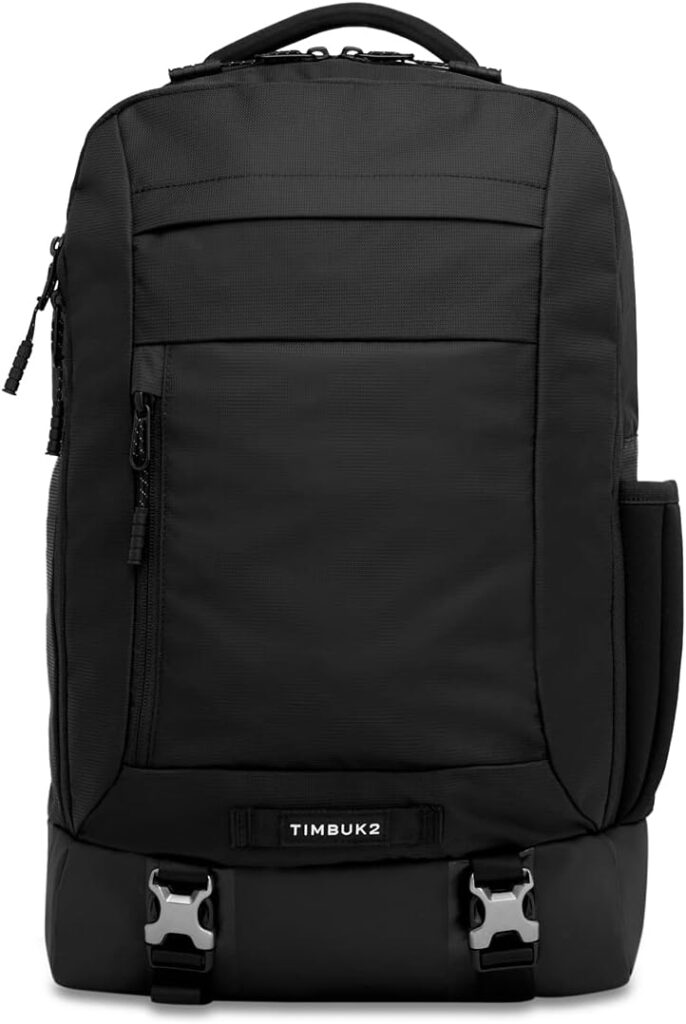
Timbuk2 Authority Laptop Backpack Deluxe
A strong choice if you like “work organization” first: Timbuk2 notes an air-mesh back panel, a luggage pass-through, and a padded sleeve that holds up to a 17" laptop.
Best “one-bag” hybrid for more extended work trips
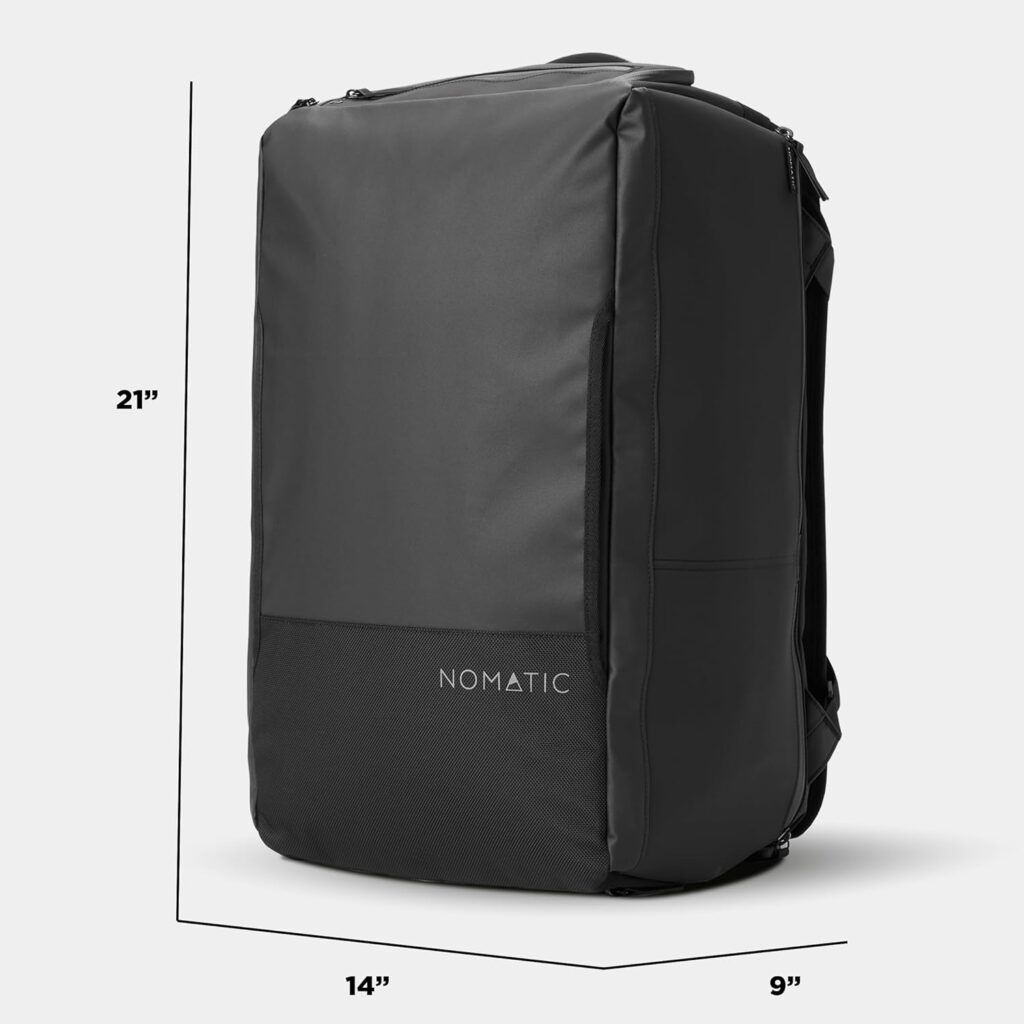
NOMATIC Travel Bag 40L
If your trips regularly run longer than a couple of nights—or you need space for shoes, a dopp kit, and extra layers—the NOMATIC Travel Bag 40L is the Nomatic model that makes sense. It’s designed for 3–7 day travel, converts from backpack to duffel, includes a luggage handle pass-through, and has a dedicated sleeve that fits up to a 16” laptop.
Why it fits business travel
- One-bag capable for multi-day trips (especially if you pack with cubes)
- Professional enough for airports/client sites (clean, structured look)
- Flexible carry (backpack when moving fast; duffel when checking in)
Best for: consultants on 3–5 day engagements, sales reps with demo gear, and anyone who wants “one bag” carry-on style for travel for business.
Quick Comparison: Match a Backpack Type to Your Use Case
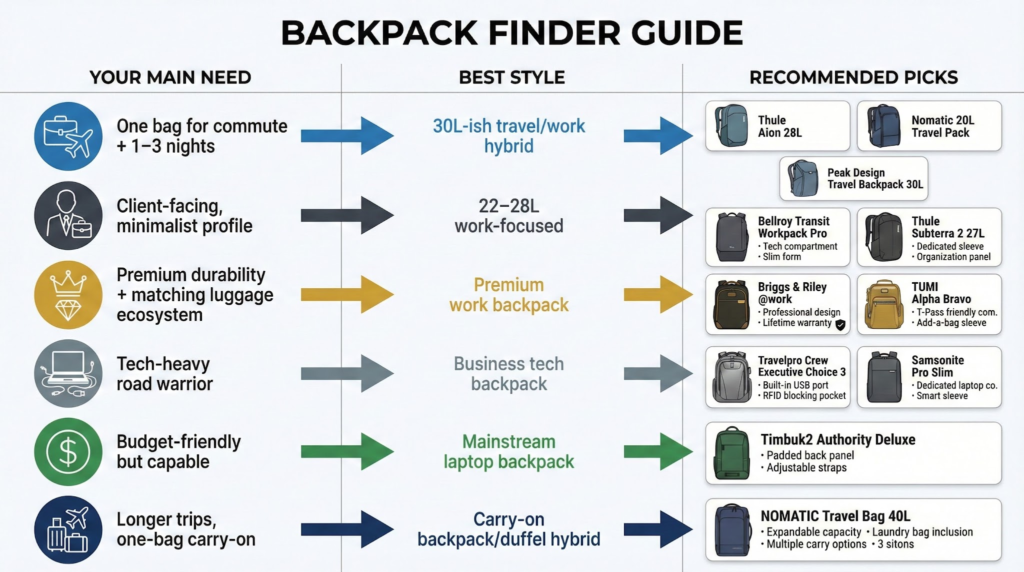
Read the article for The Best Laptop Backpacks for Business Travel.
Expert Tips (from frequent-flyer realities)
Keep your backpack “gate-ready”
Even if your bag is within limits, it should look like it fits:
- Don’t let external pockets bulge
- Use cubes to keep the profile flat
- Compress straps or choose a clean exterior
Build a “tech kit” that never leaves the bag
A slim pouch with:
- charger + cable
- backup cable
- adapter (if needed)
- small power bank
Separate receipts the moment you get them
Create one dedicated pocket for receipts and expense notes—your future self will thank you.
Estimate gate risk and travel comfort from your dimensions, packed weight, laptop size, and optional torso length.
Common Mistakes (and how to avoid them)
Mistake 1: Buying too big “just in case”
A large pack encourages overpacking and makes you look sloppy in meetings. If you need additional capacity at times, use a two-bag strategy (backpack + roller).
Mistake 2: Prioritizing pockets over usable space
Too many compartments can reduce real capacity and make packing awkward with shoes or bulky tech.
Mistake 3: Ignoring strap quality
A great-looking bag with weak straps becomes painful fast. Comfort is a feature, not a luxury.
Mistake 4: No system for dirty laundry and shoes
Even a simple shoe bag and laundry bag prevent odor transfer and keep your “meeting clothes” clean.
Conclusion
The right business travel backpack is the one that matches your real trips: your laptop size, your packing habits, your airport flow, and your work style. Start with the correct size range, lock in laptop protection, choose an organization approach you’ll actually maintain, and don’t compromise on comfort. If you travel for business regularly, first select a model category (work-focused 22–28L vs. trip-capable 30–36L), then shortlist 2–3 lines from the recommendations above and buy based on fit, comfort, and layout—not just specs.