The Best Carry-On Luggage for Business Travelers in 2025
Affiliate disclosure: This article may contain affiliate links. If you buy through them, I may earn a commission at no extra cost to you.
Introduction
When you do travel for business often, your carry-on becomes more than “a suitcase.” It’s your mobile office, your wardrobe system, and your stress buffer when flights change, overhead bins fill up, or expense receipts pile up.
An excellent business carry-on helps you:
Stay compliant with airline size rules (and avoid surprise gate-checks),
Move fast between terminals and meetings.
Keep suits/shirts presentable.
Keep laptop + chargers easy to access at security.
Pack efficiently for 1–5-day trips without checking a bag.
Below are the best options for 2025, based on what matters most to frequent work travelers: durability, smooth roll, professional look, innovative organization, and carry-on compatibility.
Business Carry-On Finder (2025)
Answer 7 quick questions to find your perfect business carry-on. Takes less than 60 seconds.
Step 1 of 7
How often do you travel for business?
What matters most? (pick one)
Typical trip length?
Do you travel with a suit or dress clothes often?
Do you prefer softside or hardside?
How important is quick-access organization (laptop/chargers/front access)?
Are you often on strict carry-on limits (EU/low-cost airlines)?
In the U.S., many major airlines reference a max around 22″ x 14″ x 9″ for a carry-on (including wheels/handles).
Globally, policies vary, but IATA publishes general guidance on carry-on sizing as a reference. (iata.org)
Why it matters: the best bag is the one you can keep with you—especially when reimbursement is slow, and you can’t risk lost luggage.
2) Mobility (wheels + handle)
Eight wheels aren’t automatically better than four—but self-aligning spinners and a stable handle system make a big difference when you’re hustling across an airport.
3) Organization for work gear
Laptop/docs quick access, a place for chargers, and a structure that doesn’t collapse into chaos when you’re packing at midnight after meetings.
4) Suit protection
Look for a garment sleeve/folder compatibility, compression systems, or a packing layout that keeps shirts flat and corners crisp.
5) Durability + warranty
If you travel 10+ trips/year, warranties and repairability become part of the “true cost” of the bag.
6) Weight
A lighter carry-on helps when airlines enforce weight limits (common outside the U.S.) and when you’re sprinting to a connection.
Top Picks
Best overall (frequent flyers who value longevity)
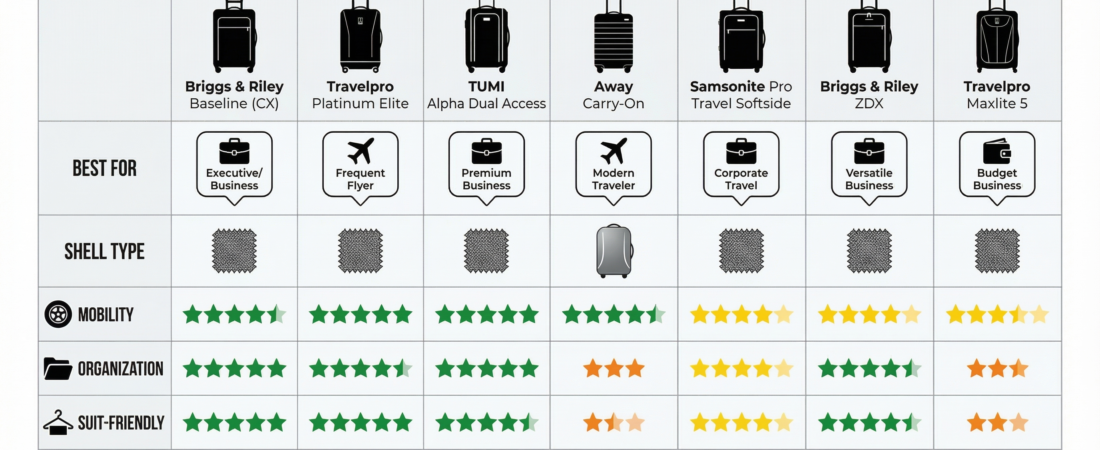
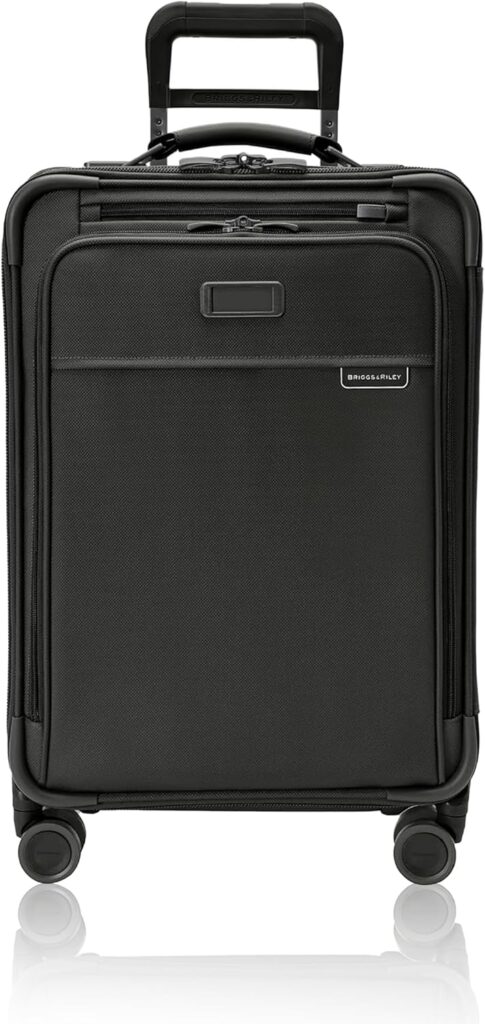
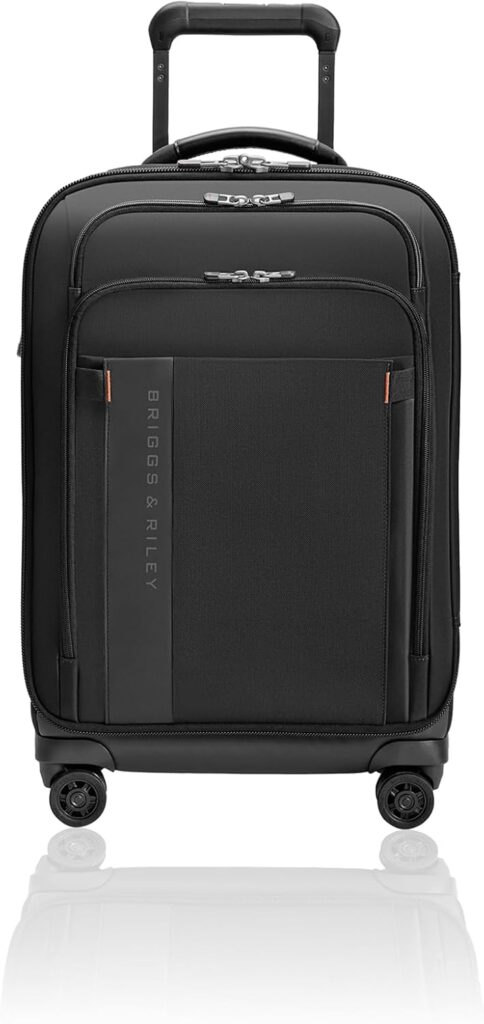
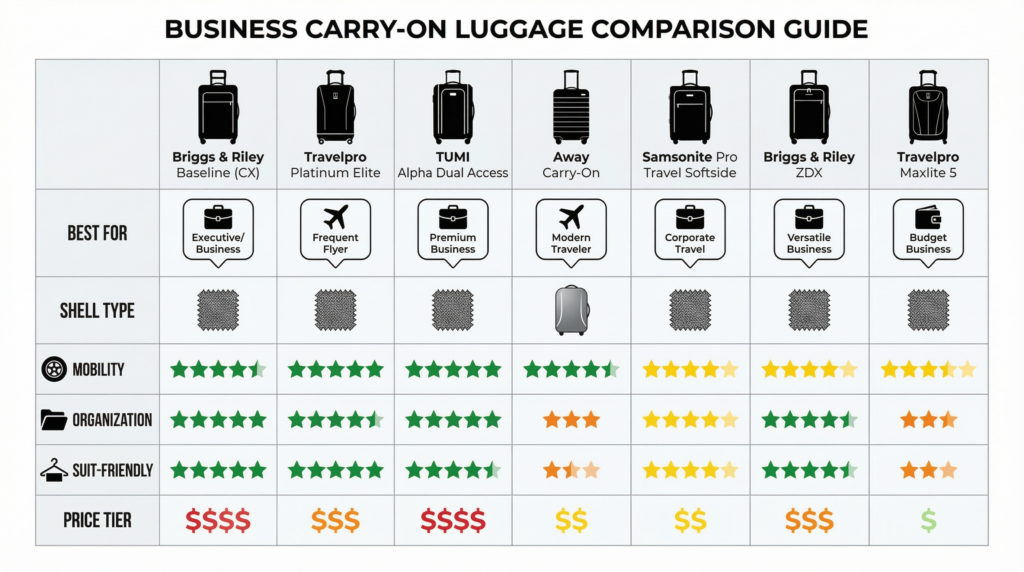
Briggs & Riley Baseline Essential/International Carry-On (CX system) Premium softside, built for heavy use, with a compression-expansion system that helps you pack more and then compress back down.
Best for smooth rolling and smart internals (excellent value in premium tier)
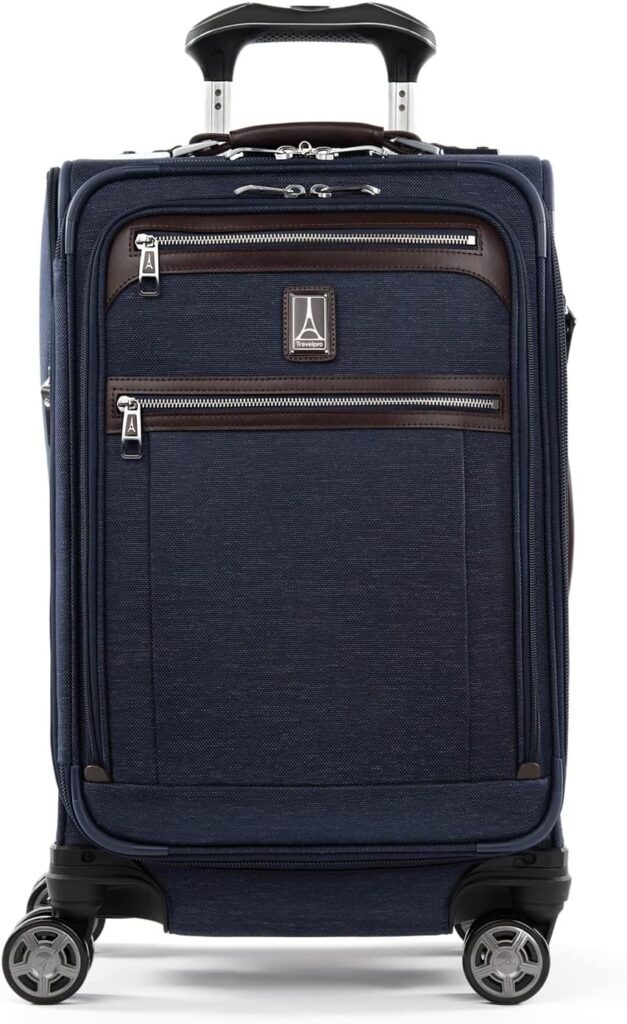
Travelpro Platinum Elite Expandable Carry-On Spinner Known for a very stable ride with self-aligning spinner wheels and business-friendly organization.
Best “executive look” + quick-access design
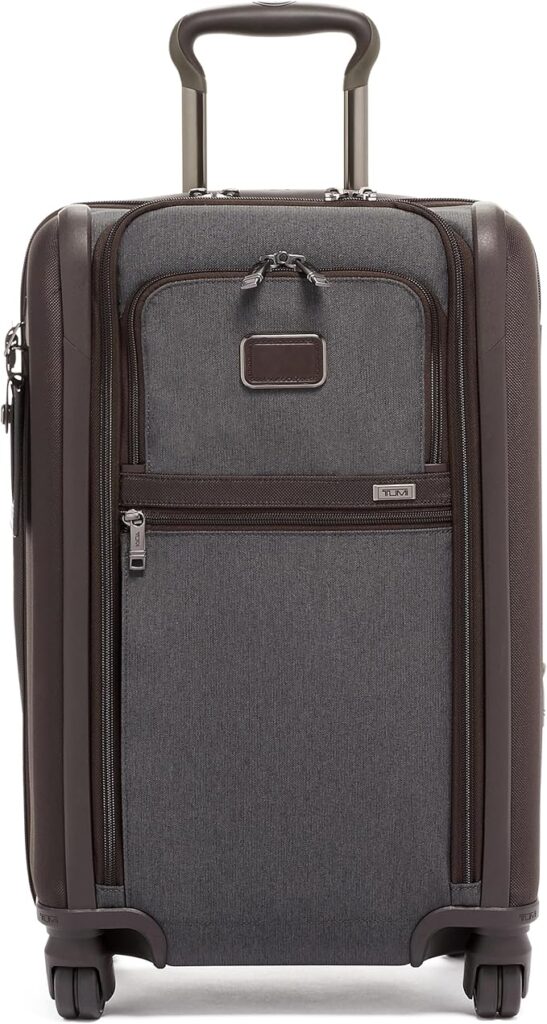
TUMI Alpha International Dual Access Carry-On If you like polished aesthetics and fast access to key items, this is the “boardroom-to-gate” pick.
If your calendar is stacked and you’re on the road constantly, the Baseline line is the closest thing to “buy once, cry once.” The headline feature is the CX compression-expansion system: it allows you to expand when packing, then compress to return the bag to its original footprint.
Why it’s ideal for work trips
It packs like a larger bag but functions as a carry-on when compressed.
Excellent for structured packing: shirts, blazer, shoes, laptop pouch
Built for years of rolling curbs, escalators, and tight connections
Potential downsides
Heavier than minimalist bags
Premium price tier
Best for: corporate road warriors, consultants doing weekly travel, anyone who’s tired of replacing luggage.
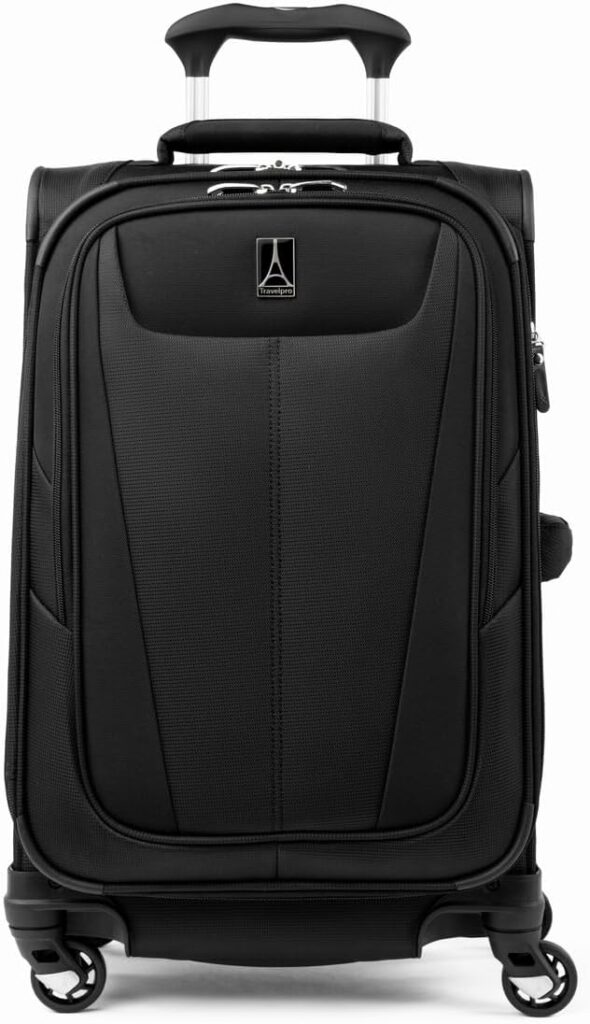
2) Travelpro Platinum Elite Expandable Carry-On Spinner—Best blend of performance and price
Travelpro has long been a frequent-flyer favorite, and Platinum Elite leans into that reputation with a strong mobility and handle system. Travelpro emphasizes its PrecisionGlide system and MagnaTrac self-aligning spinner wheels, designed to ensure straight rolling and minimize “rogue wheel” wobble.
Why it works for business
Very smooth roll for long concourses and fast walking pace.
Interior organization helps keep work items and clothing separated.
Expandable for the “I brought client gifts home” problem.
Potential downsides
Expansion can push you beyond stricter international size limits—use it carefully.
Softside fabric may show scuffs more than hard-shell materials.
Best for: travelers who want premium performance without ultra-luxury pricing.
3) TUMI Alpha International Dual Access Carry-On—Best executive-style quick access
TUMI is the “walk into the hotel lobby and look like you belong there” option. The Dual Access design is built around faster access to your packed contents, and many versions include features such as a garment sleeve and business pockets. Reviews often note carry-on-friendly sizing for international routes (always verify with your airline).
Why it’s excellent for client-facing trips
The bag’s high-end appearance pairs well with a professional wardrobe.
The quick-access concept is helpful when you’re working from lounges/gates.
Organization is typically strong for cords, documents, and accessories.
Potential downsides
Expensive
Some versions include tech add-ons you may not use daily.
Best for: executives, sales leaders, client-facing consultants, and anyone prioritizing presentation.
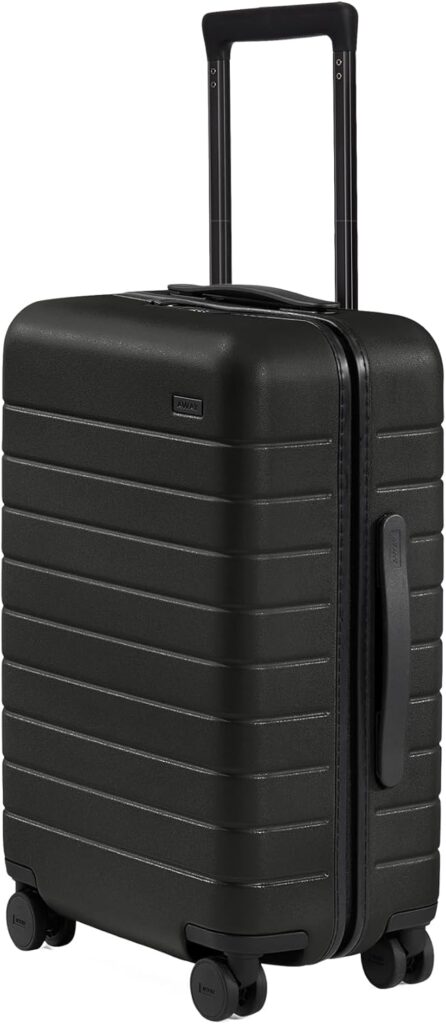
Away sits in the sweet spot for travelers who want a modern hard-shell that looks clean and handles well. It’s frequently featured in “best carry-on” testing roundups and tends to grade well on value.
Why hard shells can be great for work
Protects fragile items better in overhead bins.
It often wipes clean easily, which is beneficial after using rainy taxis and visiting dusty conference centers.
A minimal look works with business, casual, and formal travel.
Potential downsides
Hard shells are less forgiving when you overpack.
If your airline is strict on size/weight, a hard-shell structure can be less flexible.
Best for: entrepreneurs, mixed business/leisure travelers, and anyone who wants “solid performance without luxury pricing.”
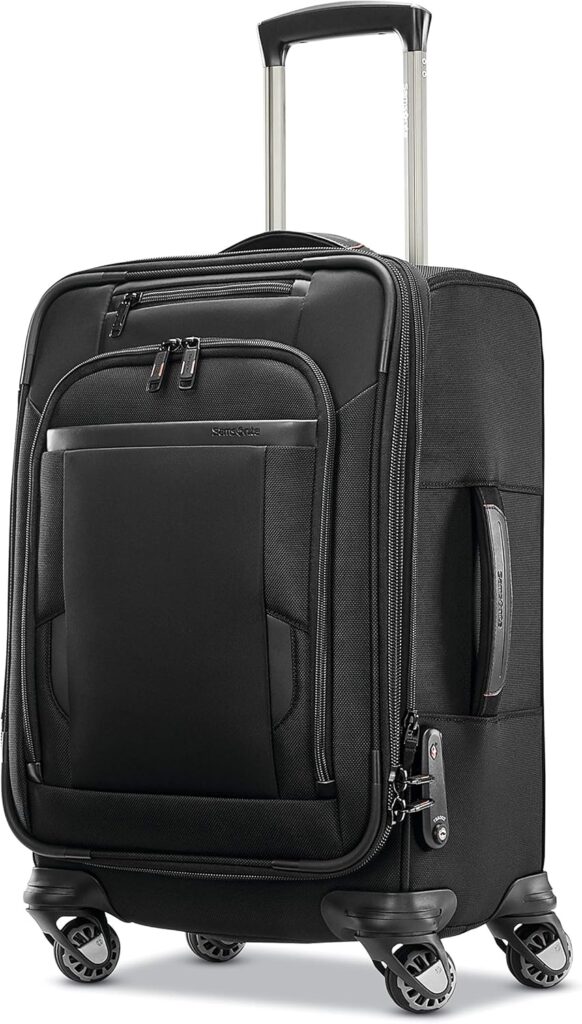
5) Samsonite Pro Travel Softside Expandable (Pro Carry-On Spinner)—Premium softside with business-first features
If you want a business carry-on that’s “feature-rich” without jumping straight to ultra-luxury pricing, Samsonite’s Pro line is designed around practical work travel details: a tri-fold suiter for keeping clothes presentable, RFID pocket, Wetpak™ pocket for toiletries or gym items, an integrated TSA lock, and expandability (1.3″). It also includes a USB port and a patent-pending wireless charging pocket (battery not included).
Why it’s great for business travel
Suiter and organization make it easier to arrive looking sharp.
Built-in pockets support “airport workflow” (security → lounge → meeting).
Ballistic nylon and reinforcements are aimed at frequent-use durability.
Potential downsides
The 10″ width can be a squeeze on stricter airlines if you overstuff it (and expansion increases this risk)
If you want a reliable carry-on without paying premium-brand prices, this is a smart choice. It keeps weight low (5.1 lbs) while staying close to the most common carry-on footprint (22″ × 14″ × 9″ overall).
Best for: sales reps, entrepreneurs, and anyone who does travel for business a few times per month and wants dependable rolling + easy packing without overspending.
Tip: If your routes include U.S. carriers, remember that many of them reference a maximum size of around 22″ x 14″ x 9″; always measure your luggage, including the wheels and handles.
Buying Guide
Choose your “work travel style” first
For travel for business, most people fall into one of these profiles:
1) The weekly road warrior (10+ trips/year) Prioritize: warranty, repairs, wheel quality, and structure. Best fits: Briggs & Riley Baseline, Travelpro Platinum Elite.
2) The client-facing professional Prioritize: appearance, quick access, and garment support. Best fits: TUMI Alpha Dual Access, Briggs & Riley Baseline.
3) The mixed business and leisure traveler Prioritize: versatility, value, and a bag that looks good everywhere. Best fits: Away Carry-On, Samsonite Proxis.
4) The budget-conscious field rep Prioritize: reliability per euro, weight, and simple organization. Best fits: Samsonite Re-Lite, Travelpro (if on sale).
Softside vs hard-shell: what’s better for work?
Softside wins for organization and flexibility (squeezing into overhead bins, exterior pockets).
Hard-shell wins for protection and a clean look but can be less forgiving when you overpack.
Airline compliance: don’t get gate-checked
Check your airline’s carry-on dimensions before buying; for example, United and Delta explicitly lists 9 in x 14 in x 22 in. (United and Delta Airlines)
IATA’s guidance is helpful as a general reference, but airlines vary by route and fare class. (iata.org)
Tech + security tip (power banks!)
If you’re carrying a power bank/spare lithium batteries, FAA guidance is clear: spare batteries and power banks go in carry-on, and if your carry-on is gate-checked,,, you should remove them and keep them with you. faa.gov This advice matters because many business travelers keep batteries in the same pocket as cables and dongles—making it easy to pull out quickly at the gate.
Final Thoughts
The “best” carry-on isn’t the most expensive—it’s the one that matches your pace, your wardrobe needs, and the airlines you fly most. For most people doing travel for business, I’d start with Briggs & Riley Baseline (if you want maximum longevity) or Travelpro Platinum Elite (if you want premium performance at a more approachable price). If your image matters in client meetings, TUMI is hard to beat. For those who want modern hard-shell value, Away is a strong baseline choice.